
7 min to read
Interoperable Decentralized Infrastructure
Integrating Handshake, Nostr, Meshtastic, and Bitcoin for Resilient, Censorship-Resistant Services
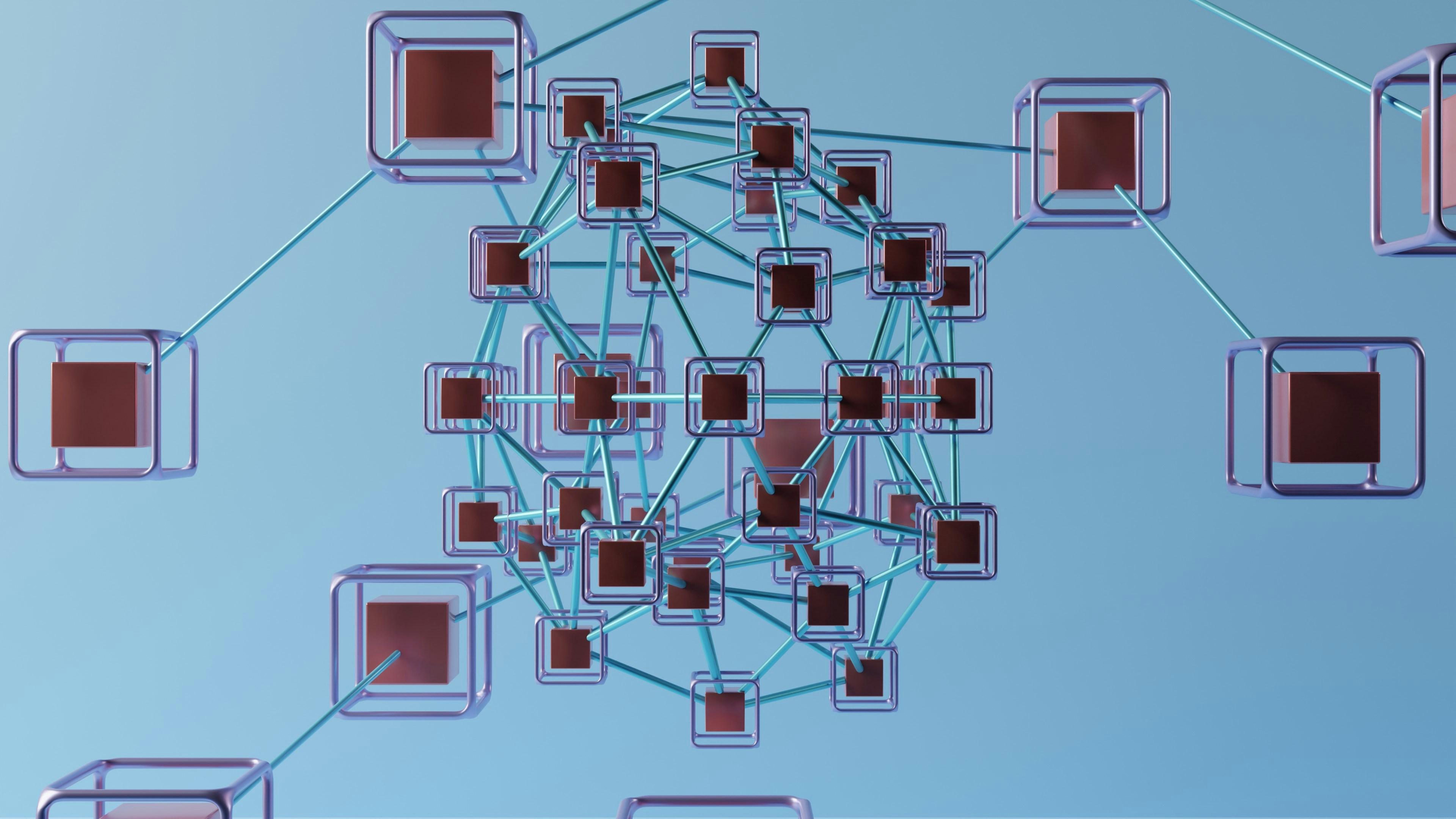
No single protocol solves decentralization. What follows is an architecture for combining four complementary ones into a coherent, resilient stack.
Abstract
This paper describes a technical architecture, protocols, and implementation considerations for combining Handshake (decentralized naming), Nostr (simple cryptographic event relay protocol), Meshtastic (LoRa mesh networking), and Bitcoin (peer-to-peer settlement and cryptographic identity primitives) to create robust services for communications and value transfer that emphasize censorship resistance, fault tolerance, and user control. We outline component responsibilities, data flows, threat models, privacy and security controls, interoperability primitives, and governance guidance for deploying such systems responsibly.
1. Goals and Constraints
Goals. Build a modular stack supporting:
- Decentralized name resolution and service discovery.
- Authenticated and optionally anonymous message/event distribution.
- Local/off-grid transport via low-power mesh radio.
- Settlement, identity bootstrapping, and optional micropayments via Bitcoin.
Constraints.
- Use open standards and free/open-source implementations to reduce single-vendor dependencies.
- Preserve privacy where possible while minimizing metadata leakage.
- Respect applicable laws and avoid advice that would facilitate illegal activity.
Each component is drawn from open protocol documentation: Handshake for decentralized root naming, Nostr for a minimal event/relay model, Meshtastic for LoRa mesh and bridging, and Bitcoin for peer-to-peer settlement and identity primitives.
2. Component Roles & APIs
2.1 Handshake: Decentralized Naming and Root Registry
Role: replace centralized root/TLD resolution with blockchain-anchored top-level names. Use Handshake records to publish service endpoints (e.g., public keys, relay addresses, Meshtastic bridge endpoints) and to store pointers to service manifests (CID/URI). Run a local Handshake resolver or use HSD/HSJS libraries to resolve name records programmatically.
Data model:
- TLD name → TXT/URL records containing a signed service manifest (JSON).
- Service manifest fields: Nostr public key(s), relay addresses, Meshtastic bridge MQTT endpoints, Tor/Onion fallback addresses, certificate fingerprints.
2.2 Nostr: Event Distribution and Identity Layer
Role: user identity (public/private key pair), signed event model, relays for message propagation. Nostr’s simple event/relay model allows clients to publish signed events and subscribe to filters. Use it for asynchronous messaging, service discovery updates, and small payload distribution (or pointers to larger payloads). Implement NIPs that allow embedding Handshake-backed manifests or Meshtastic reachability info.
Data model:
- Events include: signed metadata (bio, service manifest pointer), short messages, service announcements.
- Clients subscribe to specific pubkeys or filters (e.g., events with a service manifest tag).
2.3 Meshtastic: Off-Grid LoRa Mesh Transport
Role: local/off-grid transport using low-power LoRa radios forming a mesh. Use as last-mile connectivity where IP infrastructure is unavailable or undesirable. Bridge nodes (devices with cellular/Wi-Fi) act as gateways to internet resources (Nostr relays, Handshake resolvers). Meshtastic supports MQTT bridges and a mesh broadcast/routing algorithm suited for constrained devices.
Integration points:
- Meshtastic messages carry application payloads or pointers (e.g., Nostr event IDs, Handshake manifest URIs).
- Gateway nodes forward Meshtastic payloads to Nostr relays and Handshake resolvers via MQTT or HTTP.
2.4 Bitcoin: Settlement, Anchoring, and Identity Bootstrapping
Role: durable ledger for value transfer, optional naming or checkpoint anchoring (e.g., anchor hashes in OP_RETURN), and widely recognized cryptographic primitives (ECDSA/secp256k1 keys for identity binding). Bitcoin can be used for micropayments (relay/note incentives) and for timestamp anchoring of manifests or revocation lists.
Use cases:
- Anchor a manifest or revocation list by publishing its hash in an
OP_RETURNtransaction. - Use Bitcoin address ownership as an additional identity binding (published in a Handshake TXT record or Nostr metadata).
3. Example System Architecture & Data Flow
3.1 Components
- Edge devices: Meshtastic radios attached to mobile devices (smartphones, single-board computers).
- Gateways: Nodes with both a Meshtastic radio and internet uplink (cellular/Wi-Fi) running an MQTT bridge, Nostr client, and Handshake resolver.
- Relays/Resolvers: Public Nostr relays, Handshake resolvers, optional IPFS/CID storage nodes.
- Bitcoin full nodes or SPV wallets for transactions and anchoring.
3.2 Typical Flow: Publish a Service Manifest and Announcement
-
Operator publishes a service manifest JSON and stores its CID on IPFS (or serves via HTTPS). The manifest contains the Nostr pubkey, relay list, and gateway endpoints, and is signed by the operator’s key.
-
Operator registers or updates a Handshake name TXT record to include a pointer to the manifest (CID/URL) and its signature. Clients resolve the Handshake name to discover the manifest.
-
Operator publishes a Nostr event announcing the manifest, including the Handshake name and CID. The event is signed and distributed to relays.
-
Meshtastic nodes carry Nostr event IDs or manifest pointers across the mesh to reach a gateway; gateways retrieve manifests, connect to relays, or forward messages. Meshtastic MQTT bridges permit relays to receive mesh-originated events.
-
Optionally, the operator anchors the manifest hash in a Bitcoin
OP_RETURNtransaction for an auditable, timestamped record.
This produces multiple discovery channels (Handshake name, Nostr announcement, Meshtastic mesh broadcast) and multiple verification anchors (signature, Handshake registration, Bitcoin anchor).
4. Privacy, Security, and Threat Modelling
4.1 Threat Model
- Passive network observer: ISP, relay operator, gateway operator.
- Active censor: blocks IPs, Nostr relays, Handshake resolvers, or confiscates gateways.
- Compromised gateway: gateway performs traffic analysis or injects false manifests.
- Physical adversary: captures Meshtastic devices or intercepts radios.
4.2 Controls and Mitigations
- End-to-end signatures: all manifests and Nostr events must be signed by operator keys; clients must verify signatures independently of any single resolver/relay. This prevents false manifests even if a gateway or relay lies.
- Multiple resolvers/relays: clients should query multiple independent Handshake resolvers and Nostr relays to reduce single-point trust.
- On-device key storage and HSMs: protect private keys against extraction on gateways and edge devices.
- Metadata minimization: avoid embedding persistent identifiers in over-the-air Meshtastic payloads; use ephemeral session keys where possible.
- Gateway hardening and attestations: gateways can provide signed attestations of uptime/behavior; clients should treat gateways with an appropriate trust level.
- Fallback channels and anchoring: use Bitcoin anchoring (
OP_RETURN) as an out-of-band, tamper-evident checkpoint for manifests. - Mesh routing privacy: tune Meshtastic routing to avoid repeated retransmission patterns that reveal topology; limit message TTLs and use padding/cover traffic sparingly.
Note: Some privacy mechanisms (mixing, cover traffic, onion routing) materially increase complexity on resource-constrained Meshtastic devices and may require gateways to assist; tradeoffs must be carefully analyzed.
5. Interoperability Primitives & Formats
5.1 Service Manifest (JSON, Signed)
Fields:
| Field | Description |
|---|---|
name |
Handshake TLD |
version |
Manifest version |
nostr_pubkey |
Operator Nostr public key |
nostr_relays |
Array of relay addresses |
meshtastic_gateways |
Array of gateway identifiers / MQTT endpoints |
service_policy |
Optional, e.g., retention policy |
signature |
Operator signature over canonical manifest |
5.2 Pointer Patterns
- Handshake TXT:
manifest=https://ipfs.io/ipfs/<CID>?sig=<signature> - Nostr event: include a
#servicetag with the Handshake name and manifest CID. - Meshtastic payload: short binary carrying a manifest pointer or Nostr event ID (kept small to fit LoRa payload limits).
5.3 Size and Fragmentation
LoRa payloads are small (tens to a few hundred bytes). Use compact encodings (CBOR/Protobuf) for on-mesh pointers; place bulky content behind IPFS/HTTP and use pointers over the mesh.
6. Incentives, Resilience, and Governance
- Incentives: Bitcoin micropayments or reputation tokens (off-chain or Lightning) can incentivize relay or gateway operators to persist messages or manifests.
- Resilience: multiple independent gateways, relays, and Handshake resolvers increase fault tolerance; encourage geographic and administrative diversity.
- Governance: encourage open, auditable operations with clear abuse policies and takedown processes implemented by community governance rather than centralized control.
The goal throughout is a stack where no single operator, relay, or resolver is a point of failure or control. Each layer reinforces the others.

Comments